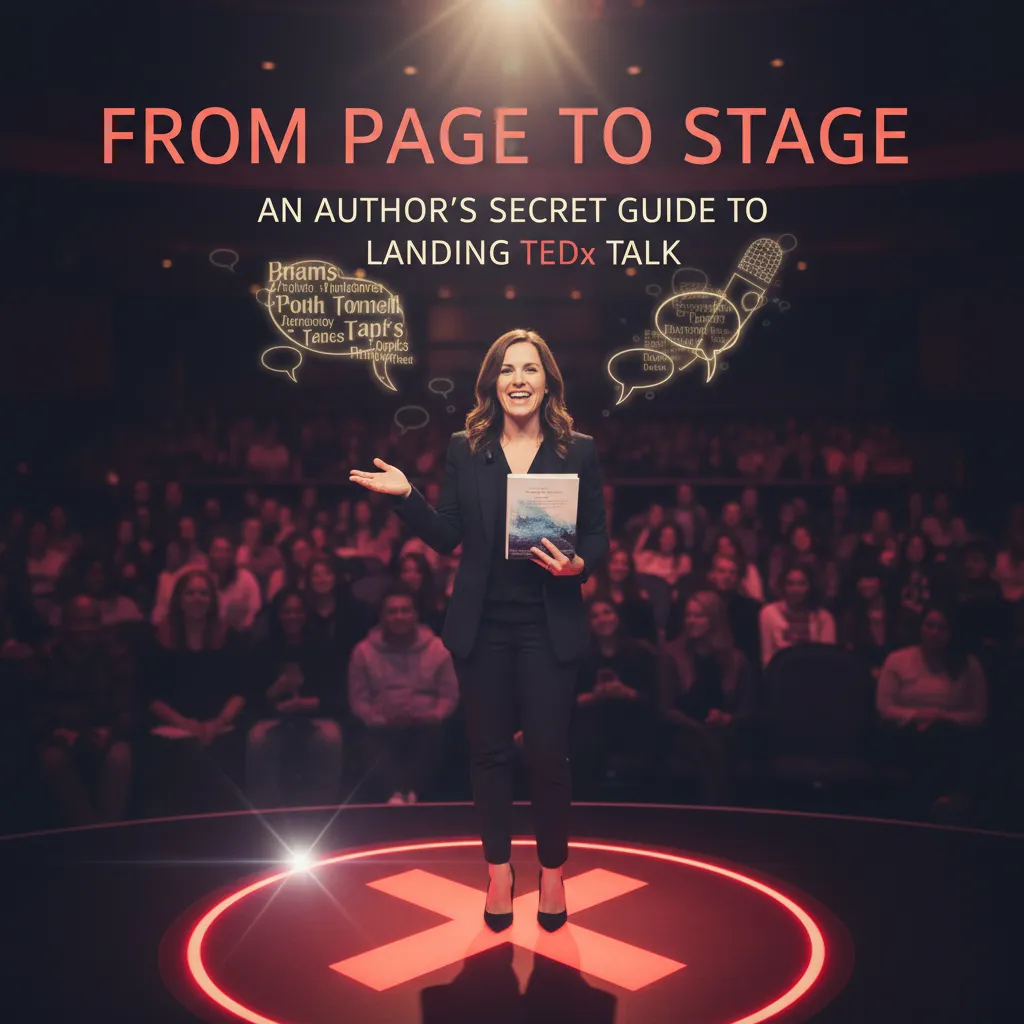
From Page to Stage: An Author's Secret Guide to Landing a TEDx Talk
So, you did it. You wrestled your expertise, your passion, and your big idea onto the page and created a book. First off, pop some bubbly, because that’s a monumental achievement. As a publishing consultant at Trillium Sage, I see the blood, sweat, and tears that go into that process every single day. But now that your masterpiece exists, you might be asking, "What’s the next level?" For many business owners and coaches, the answer is a four-letter word that echoes with authority: TEDx.
You’ve seen them. The iconic red circle, the slick presentations, the "ideas worth spreading" that launch careers and redefine industries. Getting on that stage can feel like trying to get a reservation at the galaxy’s most exclusive restaurant. But here’s a secret: it’s less about luck and more about strategy. Especially for you, an author. Your book isn’t just a book; it’s your golden ticket, your audition reel, and your strategic playbook all rolled into one.
Let's pull back the curtain on how you can transform your author status into a speaker slot on that coveted stage. This isn't about magic; it's about a smart, repeatable process.
First, Let’s Talk Strategy (and a Little Reality)
Before you start practicing your power poses in the mirror, you need a game plan. A TEDx talk is a massive credibility booster. It attracts clients, builds trust faster than a team-building retreat, and positions you as the expert. While you can't deliver a sales pitch from the stage, the talk itself becomes an invaluable asset in your marketing toolkit for years to come.
To get there, you need to understand the landscape. There are a few different flavors of TEDx events:
Standard TEDx: The classic, full-day event with a diverse audience and a broad range of topics.
TEDx Salon: Smaller, more frequent events, often focused on a specific theme. They offer a more intimate setting for speakers and attendees.
TEDx Youth: These events are geared toward a younger audience, often featuring speakers who are also young or have ideas that resonate with them.
Knowing which type of event aligns with your message is your first strategic decision. And here's your first insider tip: think local. Most TEDx organizers aren't flying speakers in from across the globe; they prefer, and sometimes require, speakers with a regional connection. Your community is your home-field advantage.
The Prep Work: Building Your "Speaker-in-a-Box" Kit
The biggest mistake aspiring speakers make is waiting for an application to open before getting their materials together. By then, it’s too late. The submission windows are tight, and the process is competitive. You need to be ready to strike like a ninja.
My advice? Create a "Speaker-in-a-Box" master document. This is your secret weapon. It’s a central folder or document where you keep everything an application might ask for, ready to copy and paste at a moment's notice. Here’s what it should contain:
Professional Headshots: High-resolution and web-ready versions.
Your Bio: Multiple lengths. A full paragraph, a 100-word version, and a punchy one-liner.
Your Core Idea: This is crucial. Write a 350-word summary, a 150-word version, and a tweet-length version of your "idea worth spreading." Hint: The core theme of your book is the perfect place to start. You’ve already done the hard work of refining it!
Pre-recorded Videos: Shoot simple, well-lit videos of you introducing yourself and your idea. Have 30, 60, and 90-second versions ready to upload. This shows organizers you're comfortable on camera.
Another pro-tip? Get involved before you apply. Attend a local TEDx event. Better yet, volunteer. Seeing the machine from the inside and getting to know the organizers makes you a familiar face, not just another name in a pile of applications.
Your book establishes your expertise, and a TEDx talk further broadcasts it to the world.
The Application Gauntlet: Playing the Numbers Game
Alright, you’ve got your kit, you’ve scouted your local events, now it’s time to hunt. Applications typically open three to six months before an event. The main TEDx website is a good starting point, but the real gold is on the individual organizers' websites. A clever trick is to use ChatGPT with a prompt like, "Find open TEDx applications in the Pacific Northwest for events happening in the next six months."
Once you start applying, get ready to play the numbers game. This is not the time to be precious. I know a brilliant consultant who applied to about ten different events. He got rejected by most, but three or four sent back incredibly positive and detailed feedback, even though they didn't select him. That's free market research!
To manage this, you absolutely need a spreadsheet. Track every single application: the date you submitted, the specific idea you pitched, the event theme, and any feedback you receive. This prevents embarrassing duplicate submissions and helps you refine your pitch for the next round. It’s a marathon, not a sprint.
Crafting the Perfect Idea: The "Just Right" Principle
Your book is a deep dive into a topic. Your TEDx talk is a compelling snapshot. The challenge is to find an idea that’s unique enough to be interesting but broad enough to connect with a general audience. If your book is about the intricate tax codes for freelance hamster trainers, your talk should probably be about the universal pursuit of passion projects or the gig economy's future.
Find the universal truth at the heart of your specialized knowledge. That’s your "idea worth spreading."
One final, critical note: The powers that be at TEDx are currently advising organizers to be cautious with speakers in the health and wellness space. If your book falls into this category, don’t despair! You just need to reframe. Instead of talking about mindfulness for stress reduction, frame it as "Boosting Workplace Productivity Through Mental Clarity" or "The Leadership Benefits of Emotional Regulation." It’s the same core idea, just dressed in a business suit.
Ultimately, landing a TEDx talk is a journey that mirrors writing a book. It requires clarity, strategy, and a healthy dose of persistence. But as an author, you've already proven you have all three. You have the idea, you have the expertise, and you have the credibility. Now go claim that stage.
Building an author platform is a powerful way to grow your business, and a TEDx talk is an incredible amplifier. But it all starts with having that core message solidified in a book. If you're ready to turn your expertise into a book that opens doors to stages, clients, and new opportunities, let's connect. I can help you navigate the entire publishing process, from concept to finished product.
SCHEDULE YOUR FREE STRATEGY SESSION TODAY!
Q: How do I find open applications for TEDx talks?
A: While the main TEDx website lists events, it's best to check individual organizers' websites for application details. Applications typically open 3-6 months before an event. You can also use AI tools with specific prompts to search for open calls in your target region and timeframe.
Q: Do I need to be a local to speak at a TEDx event?
A: It's highly recommended. Most TEDx organizers prefer or even require speakers who have a local or regional connection. Focusing on events in your area significantly increases your chances of being selected.
Q: I'm a health and wellness author. Can I still get a TEDx talk?
A: Yes, but you may need to reframe your topic. With organizers being cautious about health topics, try angling your idea toward a business or leadership context. For example, frame mindfulness as a tool for workplace productivity rather than just personal stress relief.
Q: What's the most important thing to prepare before applying for a TEDx talk?
A: Create a 'Speaker-in-a-Box' kit. This is a master document or folder containing your professional headshots, bios of various lengths, and multiple versions of your core idea (350-word, 150-word, etc.). This ensures you are ready to apply quickly and efficiently whenever an opportunity arises.

